
MMV Perspective: The Return to Inner Alignment
The American Psychological Association reports that 75% of adults experience moderate to high levels of stress, much of which stems from mental disconnection and over-identification with thoughts.
MMV Perspective: The Return to Inner Alignment
The American Psychological Association reports that 75% of adults experience moderate to high levels of stress, much of which stems from mental disconnection and over-identification with thoughts.
"Improve Your Mind"
Here is a small psychological mirrors.

Why use Artificial Intelligence (AI) is used primarily to increase efficiency, automate repetitive tasks, and solve complex problems faster and more accurately than humans.
Summary of Key Benefits: Description
TRY THE AI TOOL FREE->
MMV Cognitive Refinement Engine is not just a chatbot—it functions as:
Psychologically, this operates on three core CBT principles:



1. Most People Run on Subconscious Programming Over 90% of your daily thoughts, choices, and actions are influenced by your subconscious mind. That means your past experiences, childhood patterns, emotional associations, and even your fears are silently guiding your present behavior. You may think you’re choosing freely, but your past often chooses for you — unless you become aware of it.
2. Emotion Drives Behavior More Than Logic People make decisions emotionally first — and justify them logically later. This is why people might stay in unhealthy relationships, overspend, or sabotage opportunities. Emotions are faster and deeper than logic. Emotional intelligence is more valuable than high IQ in most areas of life.
3. What You Avoid Controls You Avoiding pain, discomfort, or conflict doesn’t make it go away — it makes it grow in power behind the scenes. Suppressed emotions leak out through irritability, fatigue, anxiety, or illness. The key is not to run — but to face discomfort with presence and curiosity.
4. You See the World Not as It Is — But As You Are Your beliefs act like filters or lenses. If you believe the world is dangerous, you'll spot threats everywhere. If you believe you're unworthy, you’ll reject compliments and opportunities. Your perception of reality is shaped by your inner world.
5. The Mind Craves Familiarity — Not Happiness We are drawn to what’s familiar, not what’s best for us. That’s why people repeat unhealthy patterns: trauma feels familiar. Healing involves rewiring the nervous system to feel safe in peace and connection.
6. Your Nervous System Remembers More Than You Do. Trauma, stress, and emotions are stored in the body — even if you can’t recall them mentally. Tight shoulders, clenched jaws, digestive issues, or chronic fatigue are often signs of unresolved emotions. Practices like somatic work, breathwork, and mindfulness help process this.
7. Every Behavior Has a Rooted Reason Even the most “irrational” behavior makes sense when you understand the need it's trying to meet. For example: Anger can be a shield for vulnerability. Overworking can mask a fear of inadequacy. Isolation can be a safety strategy from past betrayal. Understanding the why behind behavior creates compassion and clarity.
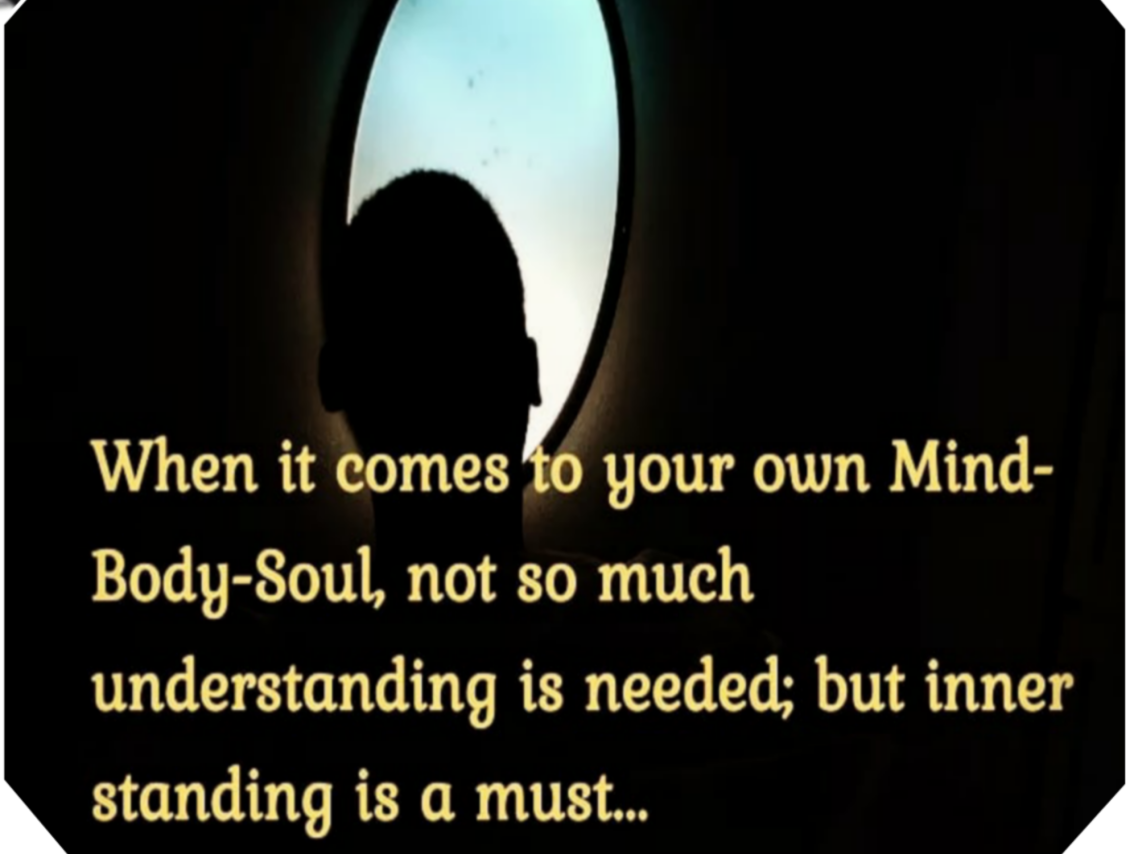
Innerstanding: Firsthand, gut-level knowing. It's not just grasping a concept with your brain, but resonating with it so deeply that you feel it in your soul.
PSYCHOLOGY IN EVERYDAY LIFE: EYE-OPENING TRUTHS
A Deep Dive into the Hidden Mechanics of the Human Mind
Trauma is not just what happens to you.
It’s also what happens inside you as a result of what happened to you — especially when your emotional response was suppressed, invalidated, or left unsupported.
It can come from:
🧍🏾♂️How People Behave When They Haven’t Healed from Trauma
People often don’t realize they’re living in survival mode. Trauma can hide behind "normal" behaviors. Here are signs someone hasn’t healed:
1
Overreactions to Minor Things (Hypervigilance)
➡️ Why? Their nervous system is stuck in fight or flight mode.
2
People-Pleasing and Boundary Issues
➡️ Why? In trauma, they learned love = approval = survival.
4
Self-Sabotage and Low Self-Worth
➡️ Why? Unhealed trauma creates inner scripts of “I’m not good enough.”
3
Emotional Numbness or Disconnection
➡️ Why? This is freeze mode — a defense mechanism to block pain.
5
Control Issues or Perfectionism
➡️ Why? Trauma made them feel powerless. Control becomes a substitute for safety.
6
Addiction or Escapism
➡️ Why? Pain avoided becomes pain multiplied. They chase relief, not healing.

A brief yet substantial overview of several websites that serve as valuable resources in the fields of education, personal growth, mental health, and wellness. Each entry highlights the unique focus and mission of these organizations, showcasing how they contribute to improving individuals' lives.
-- I AM NOT RECEIVING ANY PAYMENTS BY SHARING LINKS BELOW --
_______________________________________________________________________________________________
Visit Mentalmaptowellness: We address the full system — mind, body, behavior, and environment— and collaborate thoughtfully around medication when appropriate.


In alchemy, repetition is calcination.
What is repeated consciously reshapes the inner architecture of the mind.
If certain words carry painful energetic associations from prior experiences, replace them with terms that evoke strength, balance, and constructive transformation. Language shapes perception, and perception shapes reality.
Goddard's philosophy centers on the power of the "Human Imagination," which he identified as the divine spark or "God" described in religious texts.
31K views 4 years ago
Here is the PROOF that this world is YOU pushed out! (Proven study)

A short, 20-page eBook by John Murphy, The book explores how individuals work against themselves and discusses ways to recognize and change self-defeating behaviors
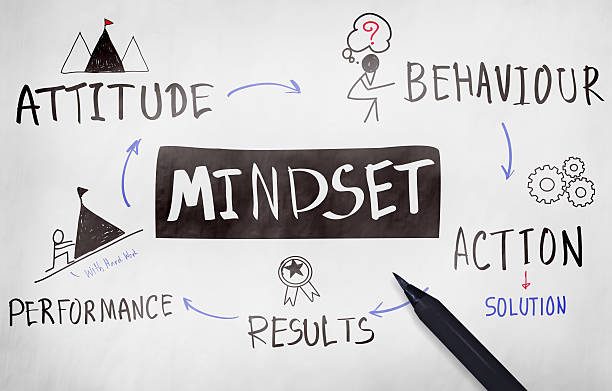
Comparative Analysis: Cognitive Engagement and Mindset Frameworks
Active Mind Usage:
Individuals who actively use their minds engage in deliberate practice, critical thinking, and continuous learning. This involves seeking out complex problems, analyzing information deeply, and challenging existing beliefs.
• Impact: Promotes neuroplasticity and builds cognitive reserve, which can delay age-related decline. Research indicates that high cognitive engagement can reduce the risk of dementia by up to 47% and delay the onset of clinical symptoms by approximately 5 years.

Furthermore, intensive mental training can increase neural processing speed and white matter integrity by as much as 15% to 20%, with neuroimaging studies demonstrating a 5% to 8% improvement in fractional anisotropy (FA) values within key structural pathways following consistent cognitive intervention.
Fixed Mindset:
The belief that intelligence, talent, and abilities are innate traits that cannot be significantly changed.
• • Behavior: Avoids challenges to protect the ego and ignores constructive criticism.
Growth Mindset:
The belief that abilities and intelligence can be developed through SOME dedication, hard work, and feedback.
• • Behavior: Embraces learning curves and persists through setbacks.
Research indicates that individuals engaging in high levels of cognitive
activity are
less likely to develop Alzheimer’s disease compared to those with low activity.
Statistical Insight:
47%
Mindset Frameworks:
Growth vs. Fixed
Passive Mind Usage:
Individuals who do not use their minds often tend to rely on routine, autopilot behaviors, and passive consumption of information. They prefer cognitive ease over mental strain.
• Impact: May lead to cognitive stagnation and a decreased ability to adapt to new or complex environments. Research indicates that a lack of continuous mental stimulation can increase the risk of cognitive decline by up to 33%.
TEXT FROM ABOVE HOME PAGE:
MMV Perspective: The Return to Inner Alignment
Most people are not lost in life—they are unacquainted with their own mind.
What appears as stress, distraction, or overthinking is not the root problem.
It is a symptom of disconnection—a separation between the observer (you) and the stream of thought (mind).
In MMVPhilosophy, this is the central fracture:
When you no longer observe your mind, you begin to become it.⬇

Modern life conditions the mind into continuous reaction:
This creates a state where:
You are no longer choosing—you are responding automatically.
Etymologically, mind traces back to roots meaning memory, thought, and intention.
It was never meant to operate unconsciously.
When awareness is absent:
thought loops intensify
stress compounds
perception distorts
This is why overthinking feels like being trapped—because there is no distance between you and the thought
MMV is not about controlling every thought.
It is about repositioning yourself in relation to thought.
Instead of:
“Why do I feel this way?”
You begin to ask:
“What is my mind producing—and why?”
That single shift creates space.
And in that space, something powerful happens:
You realize you are not the noise—you are the awareness hearing it.
Mastery is not controlling the world around you.
It is understanding the world within you—so deeply that nothing external can control you.
That is the transition:
from scattered attention → to aligned presence → to self-mastery.
To reconnect is not to escape life—it is to return to authorship.
Over time, repetition turns awareness into identity.
Disconnection is not failure—it is conditioning.
But awareness is the reset.
When you begin to understand your mind:
stress becomes information
emotion becomes guidance
thought becomes a tool
And life shifts from something happening to you
into something being shaped by you.
In "Unlocking the Secrets of Reality: A Journey Beyond the Surface," we delve into the hidden knowledge that shapes our existence.



We need your consent to load the translations
We use a third-party service to translate the website content that may collect data about your activity. Please review the details in the privacy policy and accept the service to view the translations.