
MMV Perspective: The Return to Inner Alignment
The American Psychological Association reports that 75% of adults experience moderate to high levels of stress, much of which stems from mental disconnection and over-identification with thoughts.
MMV Perspective: The Return to Inner Alignment
The American Psychological Association reports that 75% of adults experience moderate to high levels of stress, much of which stems from mental disconnection and over-identification with thoughts.


Here is a small psychological mirrors.

Why use Artificial Intelligence (AI) is used primarily to increase efficiency, automate repetitive tasks, and solve complex problems faster and more accurately than humans.
Summary of Key Benefits: Description
TRY THE AI TOOL FREE->
MMV Cognitive Refinement Engine is not just a chatbot—it functions as:
Psychologically, this operates on three core CBT principles:
"Improve Your Mind"

A brief yet substantial overview of several websites that serve as valuable resources in the fields of education, personal growth, mental health, and wellness. Each entry highlights the unique focus and mission of these organizations, showcasing how they contribute to improving individuals' lives.
-- I AM NOT RECEIVING ANY PAYMENTS BY SHARING LINKS ABOVE --
Comparative Analysis: Cognitive Engagement and Mindset Frameworks
Active Mind Usage:
Individuals who actively use their minds engage in deliberate practice, critical thinking, and continuous learning. This involves seeking out complex problems, analyzing information deeply, and challenging existing beliefs.
• Impact: Promotes neuroplasticity and builds cognitive reserve, which can delay age-related decline. Research indicates that high cognitive engagement can reduce the risk of dementia by up to 47% and delay the onset of clinical symptoms by approximately 5 years.


Furthermore, intensive mental training can increase neural processing speed and white matter integrity by as much as 15% to 20%, with neuroimaging studies demonstrating a 5% to 8% improvement in fractional anisotropy (FA) values within key structural pathways following consistent cognitive intervention.
Fixed Mindset:
The belief that intelligence, talent, and abilities are innate traits that cannot be significantly changed.
• • Behavior: Avoids challenges to protect the ego and ignores constructive criticism.
Growth Mindset:
The belief that abilities and intelligence can be developed through SOME dedication, hard work, and feedback.
• • Behavior: Embraces learning curves and persists through setbacks.
Research indicates that individuals engaging in high levels of cognitive
activity are
less likely to develop Alzheimer’s disease compared to those with low activity.
Statistical Insight:
47%
Mindset Frameworks:
Growth vs. Fixed
Passive Mind Usage:
Individuals who do not use their minds often tend to rely on routine, autopilot behaviors, and passive consumption of information. They prefer cognitive ease over mental strain.
• Impact: May lead to cognitive stagnation and a decreased ability to adapt to new or complex environments. Research indicates that a lack of continuous mental stimulation can increase the risk of cognitive decline by up to 33%.
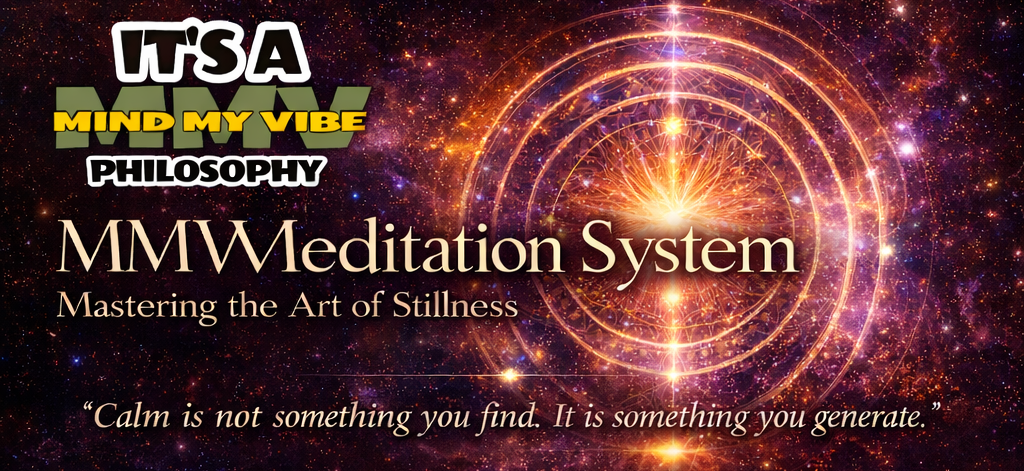
TEXT FROM ABOVE HOME PAGE:
MMV Perspective: The Return to Inner Alignment
Most people are not lost in life—they are unacquainted with their own mind.
What appears as stress, distraction, or overthinking is not the root problem.
It is a symptom of disconnection—a separation between the observer (you) and the stream of thought (mind).
In MMVPhilosophy, this is the central fracture:
When you no longer observe your mind, you begin to become it.⬇

Modern life conditions the mind into continuous reaction:
This creates a state where:
You are no longer choosing—you are responding automatically.
Etymologically, mind traces back to roots meaning memory, thought, and intention.
It was never meant to operate unconsciously.
When awareness is absent:
thought loops intensify
stress compounds
perception distorts
This is why overthinking feels like being trapped—because there is no distance between you and the thought
MMV is not about controlling every thought.
It is about repositioning yourself in relation to thought.
Instead of:
“Why do I feel this way?”
You begin to ask:
“What is my mind producing—and why?”
That single shift creates space.
And in that space, something powerful happens:
You realize you are not the noise—you are the awareness hearing it.
Mastery is not controlling the world around you.
It is understanding the world within you—so deeply that nothing external can control you.
That is the transition:
from scattered attention → to aligned presence → to self-mastery.
To reconnect is not to escape life—it is to return to authorship.
Over time, repetition turns awareness into identity.
Disconnection is not failure—it is conditioning.
But awareness is the reset.
When you begin to understand your mind:
stress becomes information
emotion becomes guidance
thought becomes a tool
And life shifts from something happening to you
into something being shaped by you.
In "Unlocking the Secrets of Reality: A Journey Beyond the Surface," we delve into the hidden knowledge that shapes our existence.
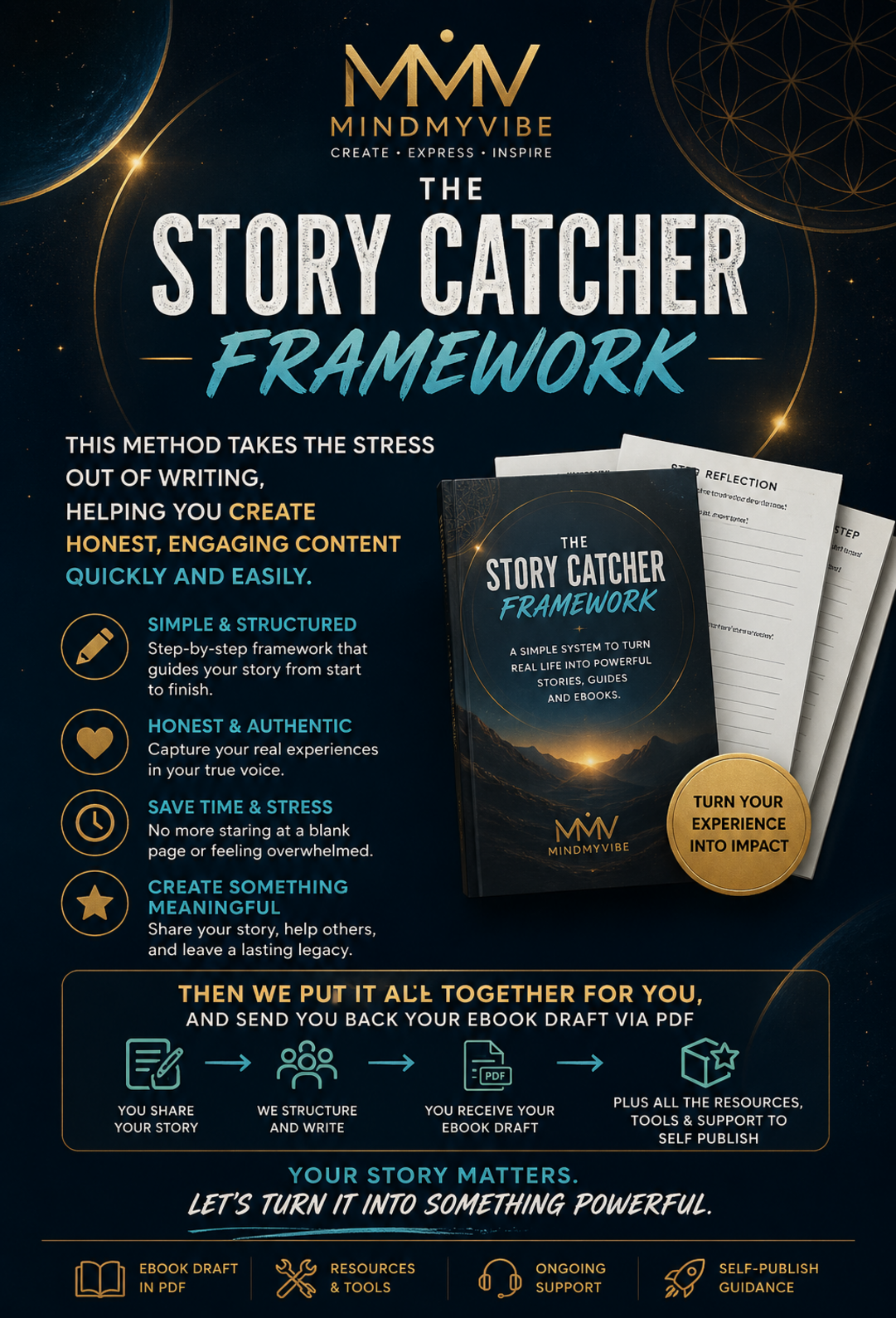
This method takes the stress out of writing, helping you create honest, engaging content quickly and easily.
COMPLET THE FORM AND EMAIL IT BACK.⬇
We need your consent to load the translations
We use a third-party service to translate the website content that may collect data about your activity. Please review the details in the privacy policy and accept the service to view the translations.